
WordPress website development cost in 2026






In 2026, launching a robust digital presence is no longer an optional luxury; it is the fundamental baseline for operating any modern business. Whether you manage an emerging startup seeking initial market validation, a mid-sized operation scaling digital operations, or a global enterprise modernizing customer experiences, your website serves as the central hub for your entire digital ecosystem. Despite the rapid influx of artificial intelligence website generators and closed-ecosystem platforms, WordPress continues to reign supreme. However, the most critical question asked by executives and founders during the project planning phase remains unchanged: What is the true WordPress website development cost in 2026?
At DigitalOriginTech, our web infrastructure analysts continuously monitor platform economics to provide accurate financial forecasting for founders and enterprise leaders. We understand that pricing in the software development industry is notoriously opaque. A simple internet search often yields frustratingly broad answers, ranging from a few hundred dollars to hundreds of thousands of dollars. This extreme variance exists because building a digital platform is akin to building physical real estate; the final price depends entirely on the foundation, the square footage, the custom architecture, and the ongoing maintenance requirements.
This comprehensive guide systematically deconstructs every financial variable associated with launching a modern digital platform. By exploring market rates, architectural choices, and long-term expenses, we equip you with the strategic insights necessary to make informed budgetary decisions and maximize the return on your digital investment.
Table of Contents
Why WordPress Dominates the Web in 2026
To understand the costs associated with the platform, you must first understand why the market continues to overwhelmingly choose it. The digital landscape of 2026 is highly competitive, and businesses demand platforms that offer total ownership and supreme flexibility.
The Power of Open-Source Architecture
Unlike proprietary, subscription-based website builders that lock you into their hosting ecosystem, WordPress is fundamentally open-source software. This architecture grants businesses absolute ownership over their data, code, and content. If a business outgrows its hosting environment or requires bespoke server configurations, it can seamlessly migrate the entire application. This data sovereignty is a non-negotiable requirement for serious modern enterprises.
An Unrivaled Integration Ecosystem
Furthermore, the platform’s longevity has resulted in an unparalleled ecosystem of plugins and integrations. In 2026, a website must act as a dynamic machine that connects with customer relationship management (CRM) software, complex enterprise resource planning (ERP) systems, and advanced analytics dashboards. Because the platform commands such a massive market share, virtually every third-party software provider prioritizes building native integrations for it. This reality significantly reduces the engineering hours required to connect disparate software tools, ultimately keeping development budgets under control.
The Four Tiers of WordPress Website Development Costs
The most accurate way to forecast your project budget is to categorize your requirements into one of four distinct development tiers. Each tier represents a different level of complexity, customization, and expected financial investment.
1. The Basic Business Website ($500 – $1,500)
The foundational tier is designed for local businesses, independent consultants, and early-stage startups that require a professional digital brochure. A basic build typically includes five to seven core pages: Home, About, Services, Blog, and a Contact page.
Development at this level relies heavily on pre-built, premium block themes. Developers configure the theme to match your brand colors, upload your logo, and implement basic on-page SEO settings. Because the heavy lifting of user interface design is already complete, the turnaround time is remarkably fast. The investment primarily covers the developer’s time to set up the hosting environment, configure essential security protocols, and format the initial content.
2. The Custom WordPress Website ($2,000 – $10,000)
When a business requires a unique brand identity that stands out from competitors, they graduate to the custom tier. A custom WordPress website involves designing user interfaces from scratch rather than forcing content into a pre-existing template.
At this tier, developers work alongside user experience (UX) designers to map out specific customer journeys. The higher cost reflects the creation of custom page layouts, advanced custom fields that allow administrators to easily update dynamic content, and integrations with marketing automation tools. Businesses investing in this tier prioritize high-performance speed, strict accessibility compliance, and a bespoke aesthetic that commands industry authority.
3. The eCommerce WordPress Cost ($5,000 – $15,000+)
Transforming a content management system into a secure, high-volume digital storefront introduces significant technical complexity. The eCommerce WordPress cost is inherently higher because the development scope expands to include product databases, secure payment gateways, dynamic tax calculation logic, and automated shipping integrations.
Using WooCommerce, developers must meticulously configure product variation architectures, implement abandoned cart recovery systems, and ensure the entire checkout flow complies with strict data security standards. A high-performing digital storefront requires rigorous quality assurance testing across multiple devices to ensure zero friction during the purchasing process. The budget at this level scales directly with the number of products, the complexity of the inventory management system, and the need for custom checkout experiences.
4. Enterprise and High-Traffic Platforms ($20,000 – $100,000+)
Large corporations, major news publishers, and global platforms face entirely different technical challenges. At the enterprise tier, development often involves headless architecture, where the WordPress backend acts solely as a content repository that feeds data via APIs to a separate, lightning-fast frontend built on frameworks like React or Next.js.
Costs in this tier encompass multi-server load balancing, enterprise-grade security hardening, custom plugin development, and complex data migrations from legacy systems. These projects require cross-functional teams working over several months to architect a solution capable of handling millions of concurrent visitors without performance degradation.
Summary of Average Costs
| Development Tier | Expected Price Range (USD) | Best Suited For |
| Basic Business Site | $500 – $1,500 | Local services, solo consultants |
| Custom WordPress Build | $2,000 – $10,000 | Growing brands, B2B companies |
| eCommerce Platform | $5,000 – $15,000+ | Retailers, digital product vendors |
| Enterprise Solutions | $20,000 – $100,000+ | Large corporations, global media |
Breaking Down the Core Cost Components
Beyond the labor required to build the application, calculating the cost of a WordPress website requires analyzing the specific technical components that power the platform. These components carry their own distinct price tags and recurring billing cycles.
Domain Registration and Web Hosting Infrastructure
Every digital asset requires a domain name and server space. Domain registration remains relatively inexpensive, typically costing between $10 and $20 annually. However, web hosting presents a vast spectrum of options that dictate your site’s speed and reliability.
Shared hosting represents the lowest entry point, costing roughly $50 to $100 per year. While inexpensive, shared hosting places your site on a server with hundreds of other applications, which can severely compromise loading speeds and security. At DigitalOriginTech, our analysts strongly recommend managed WordPress hosting for any serious business. Managed hosting providers optimize their servers specifically for the platform, offering automatic updates, daily backups, and dedicated resources. This enterprise-level infrastructure typically costs between $300 and $1,200 annually, representing a necessary investment in digital stability.
Premium Themes vs. Custom Design Architectures
The visual presentation layer of your site represents another major cost variable. If you operate on a strict budget, utilizing a premium theme from a reputable marketplace will cost between $60 and $200 for a lifetime license or annual subscription. These themes offer immense value but often suffer from code bloat, which can negatively impact page speed.
Alternatively, investing in a custom design means the developer writes clean, proprietary code specifically tailored to your exact requirements. While custom theme development adds thousands of dollars to the upfront budget, it delivers superior Core Web Vitals scores, enhanced security, and a completely unique brand presentation.
The True Cost of Essential Plugins
Plugins extend the core functionality of the platform, transforming it from a simple blogging tool into a complex software solution. While the official repository offers thousands of free options, commercial-grade websites rely on premium plugins for critical operations.
You must budget for annual licenses covering premium form builders, advanced search engine optimization suites, robust security firewalls, and performance caching tools. A standard business website often requires between $200 and $600 per year in premium plugin licensing fees. Ignoring these recurring costs often leads to outdated software, which opens the door to severe security vulnerabilities.
The Resource Dilemma: Freelance Developer vs Agency Cost
A massive variable in your final project budget involves who exactly you hire to execute the vision. Business leaders must weigh the freelance developer vs agency cost to determine the best fit for their operational requirements and risk tolerance.
Partnering with a Freelance Developer
Hiring an independent freelancer is generally the most cost-effective route. Depending on their location and expertise, freelancers typically charge between $40 and $100 per hour, or offer flat project rates that undercut larger firms. This route works exceptionally well for basic business sites and straightforward custom builds.
However, relying on a single individual introduces the risk of a single point of failure. If the freelancer falls ill, takes another job, or lacks a specific skill set regarding server infrastructure or UX design, your project timeline can stall indefinitely.
Engaging a Specialized Development Agency
Digital agencies provide a comprehensive, risk-mitigated approach to software development. When you hire an agency, you do not just get a coder; you gain access to a dedicated project manager, a user interface designer, a frontend engineer, a backend database architect, and a quality assurance tester.
This cross-functional expertise guarantees a highly polished, heavily tested final product. Consequently, agency rates are significantly higher, often billing between $120 and $250 per hour. For complex eCommerce builds or enterprise platforms where security and scalability are paramount, the higher agency cost operates as an insurance policy against catastrophic technical failures.
The Post-Launch Reality: WordPress Maintenance Fees
The most common financial mistake founders make is treating a website launch as a finite, one-time expense. In reality, a digital platform is a living software application that requires continuous oversight. Understanding and budgeting for ongoing WordPress maintenance fees is critical for the long-term survival of your asset.
Monthly Upkeep and Security Patching
The open-source nature of the ecosystem means that developers constantly release updates to core software, themes, and plugins to patch newly discovered security vulnerabilities. Failing to update your software practically guarantees a security breach over time.
Professional maintenance retainers typically range from $100 to $500 per month. This fee covers automated daily off-site backups, continuous security monitoring, uptime tracking, and the safe application of all software updates in a staging environment before pushing them to your live site.
Iterative Performance and SEO Enhancements
Furthermore, maintenance budgets should account for continuous improvement. Search engine algorithms evolve constantly, and user behavior changes over time. Allocating funds for monthly technical SEO audits, database optimization, and the creation of new landing pages ensures your digital asset continues to generate a positive return on investment rather than slowly degrading in value.
How to Strategically Optimize Your Development Budget in 2026
Achieving a high-performance digital presence does not require burning through your entire capital reserve. By implementing strategic planning, you can drastically reduce unnecessary expenditures while maintaining enterprise-grade quality.
The most effective strategy for budget optimization is embracing a phased rollout approach. Instead of attempting to launch a massive, feature-heavy platform on day one, define a strict Minimum Viable Product (MVP). Focus your initial budget entirely on the core user experience, essential branding, and a flawless mobile interface. Launch the platform quickly to begin indexing on search engines and generating user data. Once the core site is generating revenue or leads, you can reinvest that capital into developing phase two features, such as custom customer portals or advanced eCommerce functionality.
Additionally, mandate that your development partner utilizes modern native block architecture rather than relying on heavy, legacy page-builder plugins. Native block development ensures your site remains lightning-fast, highly secure, and significantly cheaper to maintain and upgrade over the next decade.
By understanding these cost drivers, selecting the right technical partners, and planning for long-term maintenance, you can confidently navigate the digital landscape and build a powerful platform that scales alongside your business ambitions.
Recent Insights:

Best WordPress Maintenance Companies
Best WordPress Maintenance Companies The shift in WordPress management from reactive troubleshooting to proactive "Performance Engineering" has redefined what it means to keep a website online. In the modern digital landscape, simple core updates and plugin patches...

RAG vs Fine-Tuning: Which Should Your Business Choose?
RAG vs Fine-Tuning: Which Should Your Business Choose?The integration of generative AI into the modern enterprise is no longer an experimental luxury; it is a fundamental baseline for operational survival. Across every major industry, business...
Contact Us
Info@DigitalOriginTech.com
Get all your questions answered by our team.
F&Q
What is the average WordPress website development cost in 2026?
What percentage of the internet uses WordPress?
Despite the rise of new technologies, WordPress maintains a dominant market share. According to highly respected internet technology surveys by W3Techs, WordPress powers over 41% of all known websites on the internet in 2026, making it the most popular content management system globally.
What is the difference between WordPress.org and WordPress.com?
Understanding this distinction is vital for budgeting. As explained by the official WordPress.org documentation, WordPress.org is the free, open-source software you download and host yourself, offering total control. WordPress.com is a for-profit, managed hosting service that handles the technical setup but restricts customization on lower-tier plans.
Are WordPress maintenance fees mandatory?
How does the eCommerce WordPress cost differ from a standard site?
Related Insights
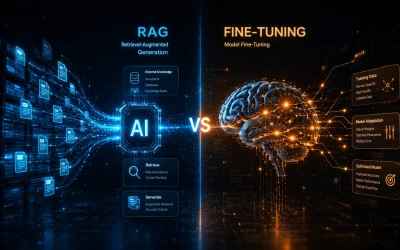
RAG vs Fine-Tuning: Which Should Your Business Choose?
RAG vs Fine-Tuning: Which Should Your Business Choose?The integration of generative AI into the modern enterprise is no longer an experimental luxury; it is a fundamental baseline for operational survival. Across every major industry, business...

Vibe SaaS Development Cost
Vibe SaaS Development CostThe landscape of software engineering is experiencing a profound paradigm shift that is fundamentally rewriting the economics of product creation. For over a decade, building a scalable software-as-a-service application...

AI Business Use Cases 2026
AI Business Use Cases 2026: 10 Strategies for Enterprise GrowthAs we navigate the fiscal landscape of 2026, the conversation surrounding artificial intelligence has shifted fundamentally. No longer is AI viewed as a experimental "add-on" or a...