
Best AI Assistant: A 2025 Deep Dive into the Top AI Chatbots for Professionals





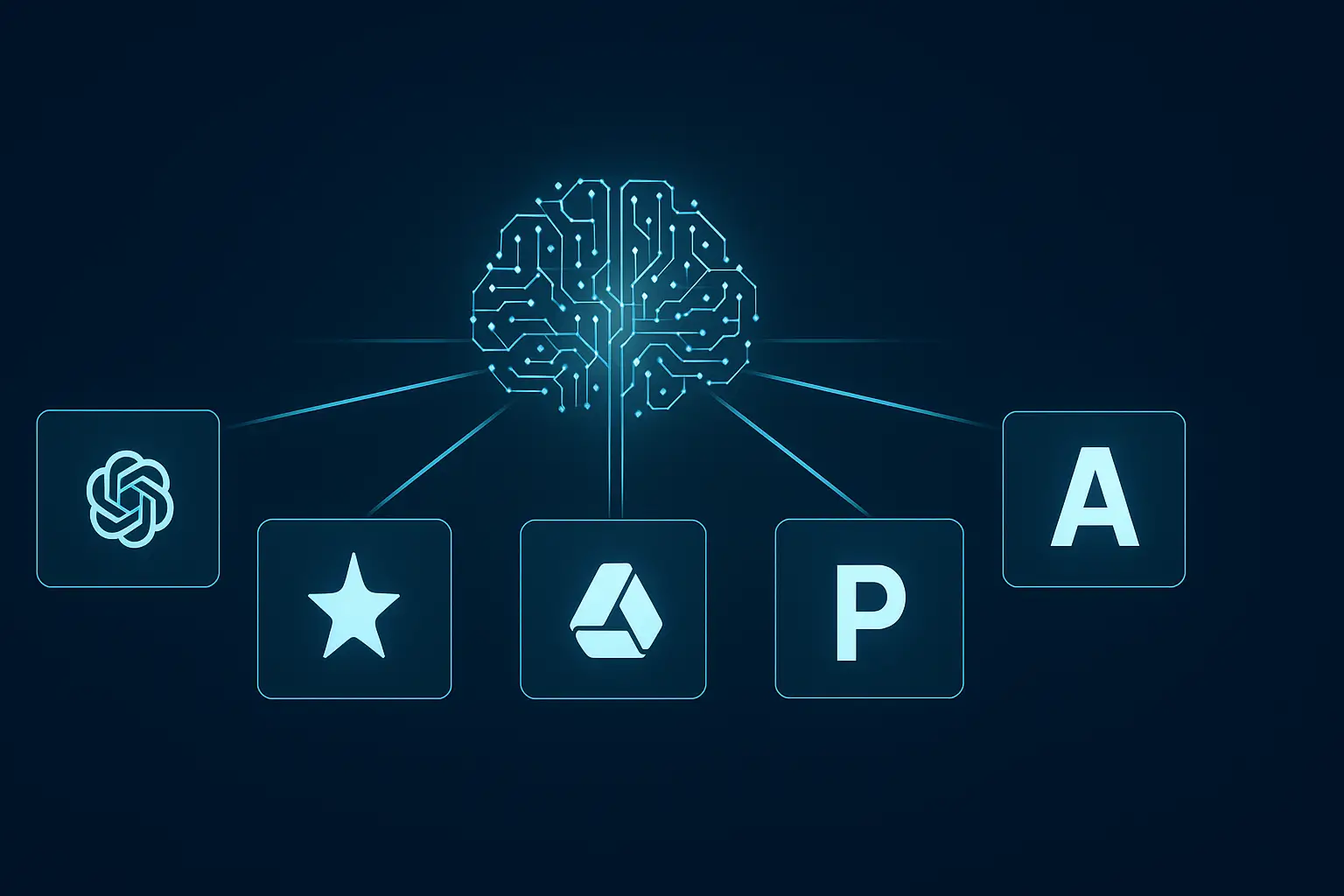
AI chatbots, powered by sophisticated large language models (LLMs), have become one of the most disruptive technologies of the decade. Since OpenAI introduced ChatGPT to the world in late 2022, a wave of innovation has swept through the tech industry, with giants like Google, Microsoft, and Anthropic accelerating the development of their own powerful AI tools. For professionals, particularly software developers, marketers, and researchers, these tools are no longer a novelty but a core component of the modern productivity stack.
But with a rapidly expanding market, a critical question emerges: which platform is truly the best AI assistant available today? The answer is nuanced, as performance often depends on the specific task at hand. This comprehensive comparison moves beyond surface-level features to analyze the leading AI chatbots—ChatGPT, Google Gemini, Perplexity, Microsoft Copilot, and Anthropic’s Claude—examining their performance in crucial, productivity-focused scenarios. At DigitalOriginTech, our analysis focuses on identifying which tools deliver the most tangible value for professionals, especially those in software development.
Table of Contents
The Evolving Landscape of AI Chatbot Technology
The field of AI assistants is crowded and competitive. While hundreds of applications now integrate AI features, a handful of core LLMs power the majority of these innovations. To provide a clear comparison, we are focusing on the five most influential AI chatbots that are shaping the professional landscape.
Each of these platforms brings a unique philosophy and technical architecture to the table, resulting in distinct strengths and weaknesses. Understanding these differences is the first step in selecting the right tool for your specific workflow.
ChatGPT: The Market-Defining Incumbent
OpenAI’s ChatGPT is so dominant that its brand has become synonymous with AI itself. As the platform that ignited the current AI boom, it remains the benchmark against which all others are measured.
-
Core Strengths: ChatGPT is an exceptional all-rounder. Its latest models, including the highly capable GPT-4o, excel at a wide range of tasks, from generating human-like text and answering complex questions to analyzing data and writing code. Its conversational nature makes it highly accessible. Recent updates have also introduced powerful agentic research capabilities, allowing the model to perform in-depth, multi-step investigations.
-
For Developers: For coding tasks, ChatGPT’s free tier (leveraging the GPT-4o model) is remarkably robust, providing reliable code generation for small scripts and functions. It is an invaluable learning aide for explaining complex programming concepts, debugging code snippets, and suggesting best practices.
-
Limitations: While its image generation has improved, it has faced ethical scrutiny. For highly specialized or time-sensitive research, other platforms can sometimes have an edge.
Google Gemini: The Integrated Powerhouse
Formerly known as Google Bard, Gemini is Google’s answer to ChatGPT. After a rocky start, it has evolved into a formidable competitor, with its primary advantage being its deep integration into the sprawling Google ecosystem.
-
Core Strengths: Gemini’s ability to seamlessly connect with Google Workspace apps (Docs, Sheets, Gmail) makes it a productivity multiplier for businesses invested in that suite. The latest model, Gemini 2.5, has shown significant improvements in reasoning and can match or even exceed GPT in certain tasks. Its connection to Google’s real-time search index gives it a strong advantage for queries related to current events.
-
For Developers: Gemini can write and execute Python code directly within its interface, a powerful feature for data analysis and quick prototyping. Its integration capabilities mean it can help automate workflows across Google’s services.
-
Limitations: Free access to its most advanced models is more limited compared to competitors, and some users still find its responses can be less nuanced than those from Claude or ChatGPT.
Microsoft Copilot: The Enterprise Default
Much like Gemini, Microsoft Copilot’s strength lies in its integration with a dominant productivity suite: Microsoft 365. Originally branded as Bing Chat, Copilot is now woven into Windows, Microsoft Edge, and the entire Microsoft 365 ecosystem (Word, Excel, Outlook).
-
Core Strengths: For the millions of professionals working within the Microsoft ecosystem, Copilot is the most accessible AI assistant. It is built directly into the tools they use every day, reducing friction and encouraging adoption. It excels at summarizing documents, drafting emails, and analyzing data within Excel.
-
For Developers: GitHub Copilot, a specialized version of the tool, is a market leader in AI-assisted coding. It provides intelligent, context-aware code completions and suggestions directly within the developer’s integrated development environment (IDE).
-
Limitations: As a generalist chatbot, the standard Copilot can sometimes feel less powerful or creative than ChatGPT for tasks outside of the Microsoft ecosystem.
Claude: The Eloquent Communicator
Developed by Anthropic, a direct competitor to OpenAI, Claude has carved out a niche by focusing on producing more natural, eloquent, and safer AI interactions.
-
Core Strengths: Claude is widely praised for its superior writing ability. It often generates responses that are less robotic and more human-like, making it a favorite among writers, marketers, and communication professionals. The Claude 3 model family (Haiku, Sonnet, and Opus) offers a tiered approach, allowing users to choose a model optimized for speed, performance, or advanced reasoning.
-
For Developers: While capable of generating code snippets, Claude’s primary advantage for developers is often in documentation and explanation. It can articulate complex technical concepts with exceptional clarity, making it a great tool for creating training materials or explaining code to non-technical stakeholders.
-
Limitations: While its user base is growing, it is not as large as ChatGPT’s or Gemini’s, and its capabilities in areas like image generation are not as developed.
Perplexity AI: The Research Specialist
Perplexity AI launched shortly after ChatGPT but took a different strategic path. It positions itself not just as a chatbot, but as an “answer engine” designed to revolutionize web search with a focus on accuracy and citation.
-
Core Strengths: Perplexity’s key feature is its commitment to providing verifiable, cited answers. It summarizes information from multiple web sources and includes links to them, making it an outstanding tool for research. It also allows users to select which underlying AI model to use for their query (including models from OpenAI, Google, and Anthropic), offering unparalleled flexibility.
-
For Developers: For research-intensive development tasks—such as exploring new frameworks, comparing libraries, or understanding academic papers—Perplexity is arguably the best AI assistant. It provides direct, summarized knowledge with clear sourcing, saving significant research time.
-
Limitations: It is less focused on generative and creative tasks like writing long-form content or generating images compared to its larger competitors.
Choosing the Right AI Assistant for Your Task
Selecting the best AI assistant is not about finding a single tool that does everything perfectly. It’s about building a toolkit and knowing which AI to deploy for which task. Our analysis at DigitalOriginTech shows that professionals can maximize their productivity by matching the tool to the job.
For Software Development and Coding
Software development is more than writing code; it encompasses research, planning, testing, and documentation. AI assistants can now support every phase of this lifecycle.
-
Best All-Rounder (Free): ChatGPT-4o offers a fantastic balance of reliable code generation, explanation, and debugging capabilities without a subscription.
-
Best for Integrated Environments: GitHub Copilot is the industry standard for in-editor code completion and assistance. For those using JetBrains IDEs, the JetBrains AI Assistant offers similarly deep integration.
-
Best for Research & Learning: Perplexity is invaluable when developers need to quickly master a new technology or research complex problems, providing sourced answers that build confidence.
For Writing, Marketing, and Content Creation
For tasks that require written eloquence and human-like communication, the choice of AI becomes critical.
-
Best for Eloquence: Claude is the top choice for drafting emails, creating marketing copy, and generating internal documentation where a natural, less robotic tone is essential.
-
Best for Versatility: ChatGPT remains a strong contender for its ability to generate creative outlines, brainstorm ideas, and produce a wide variety of content formats. Its image generation features also make it useful for creating mockups and visual assets for internal use.
For Research and Data Analysis
When accuracy and deep investigation are paramount, a specialized approach is needed.
-
Best for Verifiable Answers: Perplexity excels at providing fast, accurate, and cited answers, making it ideal for fact-checking and initial research.
-
Best for Deep Dives: ChatGPT’s agentic research features are a game-changer for in-depth investigations, although access may be limited on free plans.
-
Best for Integrated Data: Gemini and Copilot shine when analyzing data that already lives within the Google or Microsoft ecosystems (e.g., analyzing a spreadsheet in Google Sheets or Microsoft Excel).
The Strategic Imperative: Integrating AI into Your Workflow
The true power of AI assistants is unlocked when they are treated not as magic black boxes but as collaborators. None of these tools can yet supersede human expertise, critical thinking, or creative intuition. The most effective professionals use them as a supplementary force multiplier—to automate repetitive tasks, accelerate research, and overcome knowledge gaps.
Whether you are a developer debugging code, a marketer brainstorming a campaign, or a project manager planning a timeline, there is an AI assistant that can make your work faster and more effective. By understanding the unique strengths of platforms like ChatGPT, Gemini, Claude, and Perplexity, you can strategically deploy the best AI assistant for any challenge that comes your way.
Recent Insights:

Top 10 WordPress Development Companies in 2026
Top 10 WordPress Development Companies in 2026 The evolution of WordPress from a simple blogging tool into a robust, enterprise-grade Digital Experience Platform (DXP) has been nothing short of revolutionary. As we navigate 2026, WordPress powers more than half of the...

Why Use Spring Boot? Top Benefits for Java Developers
Why Use Spring Boot? Top Benefits for Java Developers (2025)In the world of Java development, efficiency, speed, and scalability are paramount. Frameworks exist to provide structure and reduce boilerplate, allowing developers to focus on core...
Contact Us
Info@DigitalOriginTech.com
Get all your questions answered by our team.
F&Q
Can AI chatbots completely replace software developers?
No, AI chatbots cannot replace software developers. While they are powerful tools for generating code, debugging, and automating tasks, they lack the critical thinking, problem-solving, and architectural design skills that are essential for professional development. They are best viewed as AI pair programmers or assistants that augment a developer’s capabilities, not replace them.
What is the most secure AI chatbot for handling sensitive business data?
For businesses with high security requirements, self-hosted or enterprise-grade solutions are the best option. Many of the major platforms, including Microsoft Copilot and CodeGPT, offer enterprise plans with enhanced security, privacy controls, and on-premises deployment options to ensure proprietary code and data remain secure.
Is it worth paying for a premium AI chatbot subscription?
For professionals who use these tools regularly, a premium subscription is generally worth the investment. Paid plans typically offer access to more powerful models (like GPT-4.5 or Claude 3 Opus), higher usage limits, faster response times, and advanced features like in-depth data analysis and better integrations, leading to significant productivity gains.
How can I ensure the code generated by an AI assistant is high quality?
Always treat AI-generated code as a first draft. It must be critically reviewed, tested, and refactored by a human developer. The best practice is to use AI to generate smaller, manageable code snippets rather than entire applications. Integrating static code analysis tools and adhering to team coding standards are also crucial steps to ensure quality and maintainability.
What is the difference between a general AI chatbot and a specialized AI coding assistant?
A general AI chatbot like ChatGPT or Gemini is designed for a wide range of tasks, including writing, research, and coding. A specialized AI coding assistant, such as GitHub Copilot or Tabnine, is built specifically for the software development workflow. They integrate directly into code editors (IDEs) and are highly optimized for context-aware code completion, debugging, and test generation.