
AI Development Cost in India: The Complete 2026 Pricing Guide






Artificial Intelligence continues to rapidly transform how global businesses operate, innovate, and compete in the modern digital economy. As organizations race to implement intelligent systems, executives frequently arrive at one critical question: what is the true AI development cost in India? The answer depends on a multifaceted range of variables, including your project’s technical complexity, deep learning data requirements, and the degree of custom architecture needed to achieve your specific business goals.
Over the years, India has solidified its position as the premier global hub for digital innovation and software engineering. The country attracts enterprise organizations worldwide due to its highly cost-effective services, advanced technological infrastructure, and an incredibly skilled talent pool. Understanding the financial investment required for these solutions empowers business leaders to plan strategically and allocate resources effectively. In this comprehensive guide, we dissect the financial landscape of building intelligent systems, ensuring you have the data needed to maximize your technological return on investment.
Table of Contents
The Rising Demand for Enterprise Intelligence in 2026
Before diving into the exact pricing structures, we must understand the current market context. By 2026, intelligent automation has firmly transitioned from an experimental luxury to a fundamental operational requirement. Organizations across healthcare, finance, logistics, and retail deploy machine learning algorithms daily to streamline complex processes, eliminate manual errors, and uncover actionable business insights.
Consequently, the boardroom conversation has shifted entirely from “Should we adopt this technology?” to “How efficiently can we build and scale it?” At DigitalOriginTech, our analysis shows that companies prioritizing early and strategic adoption achieve significantly higher operational efficiency and market resilience. However, deploying these capabilities requires a crystal-clear understanding of the artificial intelligence development services cost. Without a transparent budget and a phased strategic roadmap, organizations risk overspending on unnecessary cloud infrastructure or underinvesting in critical data preparation, leading to project failure.
Decoding the AI Development Cost in India by Project Type
The financial commitment required to build an intelligent platform varies wildly based on the specific capabilities you wish to engineer. A simple text analyzer requires vastly different resources than a fully autonomous predictive engine. Below, we break down the average estimated costs across the most common project categories in the current market.
Basic AI Chatbots (₹3,00,000 – ₹15,00,000)
Customer service automation almost always begins with basic chatbots. These targeted systems utilize standard natural language processing techniques to answer frequently asked questions, route support tickets to the correct human agents, and guide users through simple troubleshooting workflows. Because engineers generally build them using pre-existing frameworks and established APIs, basic chatbots represent the most budget-friendly entry point into intelligent automation.
Custom AI Solutions (₹10,00,000 – ₹50,000,000)
When off-the-shelf software fails to meet unique operational demands, companies must invest in custom AI solutions. These projects involve engineering proprietary algorithms tailored specifically to a business’s internal workflows. Whether you need a predictive maintenance system for heavy manufacturing hardware or a highly specialized fraud detection engine for financial transactions, bespoke development requires rigorous testing, extensive data modeling, and specialized engineering talent. This high level of customization naturally increases the required financial investment.
AI Automation Systems and RPA (₹8,00,000 – ₹30,000,000)
Robotic Process Automation combined with machine learning creates incredibly powerful workflow engines. These integrated systems automate high-volume, highly repetitive tasks such as invoice processing, manual data entry, and regulatory compliance reporting. The final cost scales linearly based on the sheer number of processes you intend to automate and the complexity of the legacy enterprise systems the automation must interact with daily.
AI Marketing Tools (₹5,00,000 – ₹25,00,000)
Modern marketing relies heavily on predictive analytics, user behavior forecasting, and extreme personalization. Intelligent marketing tools analyze consumer interaction behavior, segment global audiences dynamically, and optimize digital advertising spend in real-time. Developing these sophisticated platforms requires integrating live data from multiple customer relationship management systems and social platforms, which drives the overall development expense.
Generative AI Applications (₹15,00,000 – ₹60,00,000)
The global explosion of generative models has revolutionized corporate content creation, automated code generation, and synthetic data production. Building generative AI applications involves fine-tuning large language models or training specialized diffusion models strictly on proprietary enterprise data. The intense computational power and highly specialized prompt engineering required for this fine-tuning push these applications into a significantly higher pricing tier.
Enterprise AI Platforms (₹50,000,000 – ₹2,00,00,000+)
Large multinational corporations require centralized, fiercely secure, and infinitely scalable intelligent ecosystems. Enterprise AI platforms integrate machine learning capabilities deeply across every single department—from human resources and supply chain logistics to customer success and financial forecasting. These multi-million-rupee investments involve massive, multi-region infrastructure deployments, rigorous international security compliance, and continuous, automated model governance.
Crucial Factors Influencing the Artificial Intelligence Development Services Cost
Understanding the baseline pricing estimates only provides half the picture. Several underlying technical and logistical factors directly dictate your final invoice. DigitalOriginTech recommends carefully evaluating these six critical components before finalizing your software project budget.
1. Project Complexity and Scope
A rudimentary customer service bot costs exponentially less than a fully autonomous predictive analytics engine. Project complexity dictates the number of algorithms required, the required sophistication of the neural networks, and the depth of required security testing. Highly complex projects demand highly specialized, ground-up architectures that resist simple, templated solutions, thereby demanding more billable hours.
2. Data Availability, Quality, and Preparation
Machine learning algorithms require massive volumes of high-quality data to learn effectively and produce accurate outputs. Unfortunately, most organizations currently house their internal data in fragmented, unstructured, and messy formats. Data scientists must meticulously collect, clean, label, and structure this information before writing a single line of application code. This intensive data preparation phase frequently consumes a massive portion of the overall development budget.
3. The Development Team’s Expertise
The specific composition of your engineering squad directly impacts your monthly burn rate. Hiring junior developers lowers your upfront hourly costs but will likely extend the overall development timeline due to a steeper learning curve and potential architectural missteps. Conversely, employing veteran machine learning architects and seasoned data scientists commands premium compensation. However, senior talent ensures superior efficiency, cleaner codebases, and the avoidance of costly technical debt down the line.
4. Technology Stack and Infrastructure Requirements
Building intelligent systems requires serious, sustained computational muscle. Your technology stack choices heavily influence your ongoing infrastructure costs. Leveraging high-end cloud computing services, rendering on powerful GPUs, utilizing expensive third-party LLM APIs, and deploying complex machine learning frameworks generates high recurring expenses. Processing power remains expensive, and training complex models from scratch can quickly drain a mismanaged infrastructure budget.
5. Essential System Integrations
Intelligent platforms rarely operate successfully in a vacuum. To deliver tangible business value, your new application must communicate flawlessly with your existing enterprise resource planning software, customer relationship management tools, and proprietary on-premise databases. Each custom API connection and third-party integration adds distinct layers of technical complexity, increasing both the development timeline and the final engineering cost.
6. Ongoing Maintenance and Model Updates
Deployment marks the beginning of the software lifecycle, not the final end state. Machine learning models notoriously suffer from “model drift” as real-world data patterns change over time, causing their predictive accuracy to degrade naturally. Your operational budget must account for continuous performance monitoring, regular security updates, and periodic algorithm retraining to ensure the long-term viability and accuracy of the system.
Development Timelines: The True Cost of Speed
Time equals money in advanced software engineering. The duration of your project serves as a primary multiplier for your final financial bill. Intelligent projects follow highly varied deployment schedules based on their ambition:
-
Small Projects (4–8 weeks): Basic third-party integrations, simple data classifiers, and localized chatbots typically require one to two months to move from initial concept to live deployment.
-
Medium Complexity (2–5 months): Custom internal applications, tailored recommendation engines, and specialized predictive models generally take a few months of dedicated, full-time engineering effort.
-
Large-Scale Systems (6–18 months): Comprehensive enterprise platforms, massive data lake integrations, and foundational model training can demand up to a year and a half of rigorous development and security auditing.
If your corporate strategy demands an accelerated launch to beat a competitor to market, development agencies must assign additional engineers to your project and authorize expensive overtime. Faster delivery timelines almost universally increase the overall financial expenditure.
Why the AI Development Cost in India Offers Unmatched ROI
Enterprises globally continue to offshore their advanced engineering needs, and India stands as the undisputed global leader for these strategic investments. The pricing advantage remains significant when compared to Western markets, but raw cost-efficiency only scratches the surface of the region’s massive appeal.
India boasts a remarkably robust technical education system that produces millions of highly skilled software engineers annually. This vast, deep talent pool ensures that global businesses can easily source highly specialized roles—such as prompt engineers, data ethicists, and neural network architects—without facing the severe talent shortages currently plaguing North America and Europe.
Furthermore, development teams in this region charge significantly lower hourly rates while maintaining uncompromising, global quality standards. By partnering with established Indian engineering firms, global organizations secure high-quality technical output, innovative algorithmic problem-solving, and strict enterprise-grade security at highly competitive pricing. This optimal balance of affordability and technical excellence makes the region the premier preferred outsourcing destination for ambitious technological initiatives.
Strategic Tips to Reduce Your AI Development Budget
Organizations can successfully deploy intelligent solutions without exhausting their financial reserves. The experts at DigitalOriginTech have found that implementing a highly disciplined, phased development approach dramatically minimizes financial risk and accelerates the return on investment.
-
Start with a Minimum Viable Product (MVP): Never attempt to build the entire software ecosystem at once. Launch a stripped-down, focused version of your application that solves your primary business bottleneck. Gather internal user feedback, analyze the system’s performance metrics, and invest in further feature development only when the MVP proves its tangible value.
-
Leverage Pre-Trained Models: Building and training algorithms entirely from scratch requires massive data sets and incredibly expensive computing power. Whenever possible, utilize pre-trained, open-source base models and gently customize them to fit your specific industry domain. This strategy easily bypasses the most expensive and time-consuming phases of initial model training.
-
Prioritize Data Quality Early: Do not wait until the active engineering phase to organize your internal company data. Clean, format, and centralize your business data lakes before hiring a development firm. This proactive internal step saves hundreds of expensive billable hours in agency data preparation.
-
Develop in Phased Sprints: Move away from monolithic deployments. Roll out your platform in distinct phases, allowing your organization to absorb the technology slowly and spread the financial cost across multiple fiscal quarters.
-
Choose an Experienced Development Partner: Inexperienced engineering teams make costly architectural mistakes. Partner closely with an agency that possesses a proven, verifiable track record in your specific industry. Their foresight and established architectural patterns will actively prevent expensive re-engineering later in the project lifecycle.
Cost Breakdown by Business Size
Different organizational tiers naturally possess vastly different technical requirements, data volumes, and budget thresholds.
-
Startups and Small Businesses (₹3,00,000 – ₹25,00,000): Early-stage companies typically focus on deploying targeted, lightweight applications that automate specific operational bottlenecks, such as customer onboarding, lead qualification, or basic marketing content generation.
-
Mid-Sized Companies (₹10,00,000 – ₹50,000,000): Rapidly growing organizations invest heavier capital in cross-departmental automation, robust predictive analytics engines, and massively enhanced customer experience platforms.
-
Enterprises (₹50,000,000 – ₹2,00,00,000+): Global corporations require comprehensive, fiercely secure, and deeply integrated platforms that fundamentally alter and optimize their entire global operational model.
Conclusion: Maximizing ROI with Strategic Planning
Determining the exact budget for intelligent automation requires a careful, honest analysis of your core business objectives, current data maturity, and future operational scale. While the financial investment varies dramatically based on project complexity and infrastructure needs, leveraging the immense talent pool in India provides a definitive, unassailable strategic advantage.
Whether your technical roadmap calls for a simplistic customer service bot or a massive, multi-tiered enterprise infrastructure, the region reliably delivers an exceptional blend of affordability and world-class engineering. Businesses that approach their digital transformation strategically—starting small with an MVP, obsessively prioritizing data cleanliness, and carefully choosing the right development partners—will undoubtedly maximize their technological return on investment while effectively minimizing their operational and financial risks.
Recent Insights:

Best WordPress Maintenance Companies
Best WordPress Maintenance Companies The shift in WordPress management from reactive troubleshooting to proactive "Performance Engineering" has redefined what it means to keep a website online. In the modern digital landscape, simple core updates and plugin patches...

RAG vs Fine-Tuning: Which Should Your Business Choose?
RAG vs Fine-Tuning: Which Should Your Business Choose?The integration of generative AI into the modern enterprise is no longer an experimental luxury; it is a fundamental baseline for operational survival. Across every major industry, business...
Contact Us
Info@DigitalOriginTech.com
Get all your questions answered by our team.
F&Q
Why is the AI development cost in India more affordable than in Western countries?
The affordability stems directly from a lower regional cost of living and a massive, highly competitive talent pool of graduate engineers. This unique economic environment allows Indian development firms to offer significantly lower hourly billing rates while delivering enterprise-grade technical quality that consistently matches or exceeds Western standards.
What hidden expenses should I expect when building machine learning models?
How do pre-trained models reduce the artificial intelligence development services cost?
Is it better to invest in custom AI solutions or subscribe to existing SaaS products?
Are global enterprises continuing to increase their investments in intelligent automation?
Yes, corporate investment in intelligent technology continues to accelerate at a rapid, unprecedented pace globally. According to comprehensive state of AI adoption research, the vast majority of enterprise-level organizations have moved firmly past experimental pilot programs and are actively integrating these advanced capabilities deeply across multiple core business functions to drive lasting value.
Related Insights
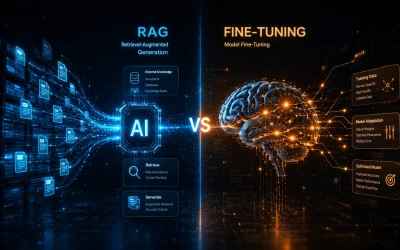
RAG vs Fine-Tuning: Which Should Your Business Choose?
RAG vs Fine-Tuning: Which Should Your Business Choose?The integration of generative AI into the modern enterprise is no longer an experimental luxury; it is a fundamental baseline for operational survival. Across every major industry, business...

Vibe SaaS Development Cost
Vibe SaaS Development CostThe landscape of software engineering is experiencing a profound paradigm shift that is fundamentally rewriting the economics of product creation. For over a decade, building a scalable software-as-a-service application...

AI Business Use Cases 2026
AI Business Use Cases 2026: 10 Strategies for Enterprise GrowthAs we navigate the fiscal landscape of 2026, the conversation surrounding artificial intelligence has shifted fundamentally. No longer is AI viewed as a experimental "add-on" or a...